Why Fit In When You Can Stand Out
Why fit in, when you can stand out. #ideas #creativeideas pic.twitter.com/gvk22PH36x
— David Tyler (@DavidTylerVO) October 27, 2015

Why fit in, when you can stand out. #ideas #creativeideas pic.twitter.com/gvk22PH36x
— David Tyler (@DavidTylerVO) October 27, 2015


There is no better feeling especially on a dark, rainy September day, than knowing there is a hot cup of coffee waiting for you at work. All you need to do is ordering coffee pod delivery in NY and enjoy your coffee.
As a voice over artist I know there are plenty of voice coaches who say you should never drink coffee because it’s a diarrhetic and will dry you out and they’re right, however I find the benefit of a more open airway outweighs that warning and because of being able to breath better it actually helps me do my voice work.
Like I explain to students who take my online course, caffeine is a drug that is very similar to theophylline. Theophylline is a bronchodilator drug that’s taken to open up the airways in the lungs. A study done in 2007 scientifically demonstrated that point.
All things considered I never, ever put any dairy products into my coffee because it make’s your mouth sticky or ‘clicky’, which is most definitely not good for recording voice over. The biggest reason people give for adding milk or cream to their coffee is usually because it just doesn’t taste good.
So if you’re like me and want to enjoy your coffee to the fullest here are 3 ways to do it!

A big part of the taste of coffee comes from the oils it produces. Sadly those who use a paper filter between bean and cup are losing some of those flavour oils in the process. To keep the oils in your coffee consider using a French Press like the one pictured to the right. You’ll taste the difference right away.
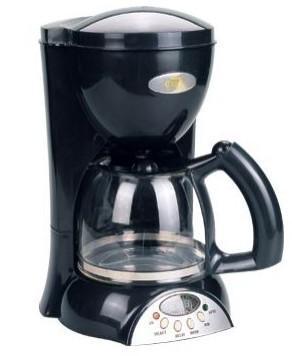
If you have no choice but to use a drip coffee machine with a paper filter consider it’s biggest drawback…the water never gets hot enough to get the most flavour out of the grounds!
Try this next time: preheat the water by running it through the machine without any coffee. Then after setting up your filter and coffee, run that same pot of now hot water through for a second time! Remember, the hotter the water the better the taste.

For the best tasting coffee also consider how you store your beans before you use them.
You should never take beans directly from the freezer and put them directly under steaming water. The beans you want to use are the ones at room temperature.
If you buy your beans in bulk divide them up into weekly sealed containers. Keep what you’ll need for the week on the counter at room temperature (or in the fridge) and the other weeks’ portions in the freezer to preserve them for later use.
Bonus Tip: Buy your coffee beans freshly roasted and only grind them when you’re ready to use them.
If you love coffee like I do, try these 3 tips on for size and let me know your results!


Admittedly, one of the hardest things for radio people to do is to listen to their radio station the way a listener listens, but it remains a crucial skill that broadcaster’s need to develop before they can properly brand their radio station.
For far too long radio programmers have thought they heard listeners say they wanted “Less Talk, More Rock”, yet that was an over simplification of what listeners were asking for from their radio station.
With radio’s ever increasing competition from satellite, streaming, and internet radio, not to mention a flotilla of other entertainment options like digital TV, home theater and video games, we have to better understand what listeners come to our stations for and echo that proposition in our imaging statement.
It doesn’t matter how hard you want to be “The Rock Station That REALLY Rocks”, if the audience doesn’t see you as being that then you will only be “The Rock Station That THINKS It Really Rocks”. Branding begins in the consumers mind so the first step to better branding is to understand how we are perceived.
What’s For Dinner
As an entertainment option, let’s try to understand why people turn to radio. Imagine this: You and your significant other go out to a restaurant for dinner with a couple of friends. What are you actually going out for, the food? Not necessarily. While the food is the object of the get together, it isn’t the reason for getting together, you want to talk, catch up and share stories. In the same way, your listeners are coming to you for the music (or information if you are a News/Talk station) but what’s making them stay and what compels them to come back time and time again? As I’ve said in other articles, songs (or information) are the bricks of this ‘radio house’ if you will, but what holds it all together is the mortar…what’s holding your ‘radio house’ together?
Better Radio Imaging Through Better Understanding
So how does all of this relate to imaging your radio station? As soon as you realize that the reason your listeners are listening to your radio station isn’t just for the music you’ll see that “Less Talk, More Rock” isn’t a very good way to brand yourself in fact it’s quite limiting. Saying that you play “10 Songs In A Row” or “100 Songs In A Row” for that matter, doesn’t cut it either. If that’s what they really want they’ll just plug into their iPod and get 1,000 songs in a row! It’s necessary to understand what makes your listener listen and then give them that wrapped up neatly in your imaging. If your audience’s understanding of what your station is doesn’t match yours then ask yourself why? Then decide if you should change your station or adjust your imaging to match your listener’s expectations.
Time to Rethink
Branding is an art that honestly, most radio people haven’t mastered yet. You need to capture your listener’s imagination while reflecting their perceptions. To help make my point I use this example often: if a radio person were in charge of coming up with the imaging statement for Coca-Cola it would be something like, “Your Favourite Blend of Sugar, Water and Artificial Coca Flavouring”. Uh, yeah, that’s what it is, but how is it perceived in the mind of the consumer? It’s seen as being the number one Cola on the market, they defined what all Cola’s are, Coca Cola was the first cola drink most of us ever experienced, which is why it is better branded as: “The Real Thing”.
Do you see how brand savvy companies have captured the spirit of how the consumer sees their product? So why would you brand your radio station as being the station that “Plays Your Favourites Of The 70’s 80’s, 90’s and Now”. It’s time to rethink the way you brand your radio station. Ask yourself, what is the unique proposition that you can offer a listener. Or better yet ask your listener what they think of your radio station.
Conclusion
While a perceptual study is a good idea I would never rely entirely on its outcome, the way they are done can be misleading. Remember it was a focus group that gave us “Less Talk, More Rock”… That being said listen to what your jocks are saying about the calls they get, at public events strike up a conversation with a listener or even hang around in the lobby and listen to what contest winners are saying about the station to your receptionist. You may be surprised at what you actually hear your listeners say about your station…because it won’t be about the food!
[blockquote author=”David Tyler”]Connecting is the key to influencing is the key to leading is the key to success![/blockquote]


“Feelings, whoa, whoa, whoa, feelings….” as the Morris Albert song goes…are not always expressed in a meaningful way by everybody.
While it may not matter as much on an interpersonal level, when there are millions of advertising/marketing dollars on the line you may want a better understanding of consumer “feelings”.
For decades, advertising and marketing agencies have employed focus groups to help their clients better understand their customers. However, using the more traditional methods of collecting data isn’t always fool proof.
Today there is a way to take the guesswork out of interpreting focus group results using facial recognition software.
High Tech Answer
There are 2 primary companies who have dove into this field with both feet.
1) Affectiva is a spinoff of MIT’s Media Lab and their software claims to be able to get an accurate measurement of people’s true feelings with what they claim is the largest database of facial expressions, correlate-able to their appropriate emotions.
And 2) Eyeris who have already sold their flagship software EmoVu to 3-letter law enforcement for use during interrogations. Now, Eyeris is exploring how to embed EmoVu into consumer electronics. The idea is to tap into the camera of a smart TV (or phone) to understand what the people in the room are enjoying (or not) and to make recommendations for other programming to watch! Rest assured it’s a feature that the consumer will be able to turn on or off.
Knight Rider Revisited
Both companies are considering their technology for the automotive industry. Imagine a car that will recognize your facial expressions and react accordingly. If you were falling asleep…it might suggest you pull over for a nap or if it saw that you were getting aggravated in traffic it might suggest some relaxing music. Another application might be in hospitals to gauge the true feelings of post operative patients to help make treatment decisions to aid with their recovery.

When it comes to understanding consumer behaviour the implications for this kind of technology are far reaching. Any advertising or marketing firm who want to be able to give the best information to their clients should at least be considering this software.
Technology Crutch
The technology shouldn’t be used as a cover-all but to help in asking the right focus group participant, the right question. If one subject reacts in a negative way to a commercial or product presentation for example, it opens the door to specifically ask them a question to understand why.
A warning: the data attainable by facial recognition software should be used as an aid, not as pure illumination.
I have always been and remain a fan of Clotaire Rapaille‘s method of gaining insight for his clients, but if you are looking for a high tech solution one of the aforementioned will get the job done.

It was a beautiful spring morning in Montréal, the kind we had dreamt about all winter long, the smell of Saturday was calling out, the birds were singing their morning song, the smell of freshly cut grass occasionally blew in. My wife, my sons and I decided to go out for brunch at a local restaurant. As we sat there on the terrace I noticed a group of teenagers across the street who were holding a car wash, whether they were a softball team, soccer team, school band I wasn’t quite sure. It was obvious however that they were having quite a difficult time attracting anyone despite the fact that there had been a downpour the night before. They were waving their signs, yelling and jumping up and down but to no avail. After watching this scene for maybe half an hour and as our waitress cleared the table I had an idea…was it a need to help or just my own selfish desire to prove a point I don’t know. I grabbed a black sharpee from the car and ran across the street. After introducing myself and my idea I took 4 of their signs, flipped them over and simply wrote “Car Wash $10”. I headed back to the restaurant to enjoy my freshly frothed cappuccino and to see my plan unfold. Sure enough, before I could get past the foam topping, cars had started to pull into the parking lot and by the time I had paid the bill, there was a line-up! All in a days work I thought as I piled my family into the car to head home and turned on the radio just like I had told one of my clients the week before ‘the simpler the message the better’!
While the kids had thought to bring all of their buckets, wash cloths, hoses, soap and a change of cloths all the elements you need for a successful car wash they hadn’t thought about how they were going to attract their customer. Their attempts were confusing at best, each one of their signs had different messages each explaining in a different way what the car wash was for, why they should stop and let them wash their car etc. What they needed was one simple and clear message to attract customers “Car Wash $10”.
Think It Through
So how does this apply to branding your radio station? Think about it, you’ve spent millions of dollars buying and setting up a transmitter, setting up a radio station, hiring the right people and picking the right music, but how much thought have put into the message you’re using to attract customers.
It has been said that radio people are so close to their radio station that all they see are the trees. Radio listeners on the other hand see the forest, the bigger picture. Well these days in our over communicated world (as Nick Michaels calls it) I’ll take it a further step back! Radio listeners today are seeing that forest as they fly down the highway of life doing 100km/h!! So how do you expect them to see what it is you’re selling amidst a landscape filled with messages? We have to create a message that is so simple, so clear that nobody can miss its intention. “Car Wash $10”.
Some products can be as easily identified by there positioning statement as by the brand name or logo. Here are some examples:
• “The Real Thing”
• “Mm’mm Good”
• “I’m lovin’ it”
• “Eat Fresh”
• “Just Do It”
Your Brand Message
So what message are you giving to your listeners?
• Your Favourites of the 70’s 80’s 90’s and Today
• The Rock Station That Really Rocks
• Give us 30 minutes. We’ll give you an incredible variety of songs
• The only radio station that gives you 50-minute music hours
• Rebooting your workday, with all your favourite songs from all your favourite stars
All very nice but memorable? No. You need to pick a word or short phrase and own it. Make it signify what your station is in the mind of your listener. Your message needs to be sharpened to the point where it can cut through the clutter. Keep it simple, keep it focused, keep it clear, keep it consistent and you’ll get them lining up around the corner.

Whether you’re building a website, blog post, creating an info graphic or ad campaign, here are 9 of my favourite places to get royalty free stock images.
1. PIXABAY – Has got to be the easiest of these website to search for the right picture. You can use the category browser or use the “search” feature. The only downside to the search feature is that sometimes it will show you pictures that come from paying services like Shutterstock which kind of defeats the purpose, but that’s how the finance the website.
2. GRATISOGRAPHY – Another beautifully designed website, easy to browse. There are lots of fun and quirky choices here…also some very attractive shots too. All pictures were photographed by Ryan McGuire and free of copyright restrictions.
3. PICOGRAPHY – While the collection here is smaller than the previously mentioned websites, the pictures are truly stunning. Try the search feature and see what you can come up with for your next project in need of a photo. Picography is also looking for your input on their pics, note the comments set ion for each pic.
4. PUBLIC DOMAIN ARCHIVE – The collection here is likewise smaller, but the quality of those images is high. This website is put together by Matt Hobbs and his family. For a small fee ($10/month) you can get access to a private collection of images and bulk downloads.
5. UNRESTRICTED STOCK – While they do provide high quality photographs, the forte of this website seems to be it’s vector graphics and icon sets. Be sure to read their license agreement before you download.
6. LIFE OF PIX – You can use the Google-esque search engine or browse through another set of stunningly amazing pictures by category here. This website I’m proud to say has been put together by a local Montreal agency (Leeroy Advertising Agency).
7. PIC JUMBO – Another fantastic set of images for you to use in your personal or commercial work. What I like the most about this website (besides the photographs of course) is the “test-drive” feature that lets you see what the photo you’re thinking of downloading in various contexts. Try it out! This website also provides a premium service ($6/month) where you can have pics sent directly to your email.
8. UNSPLASH – Even more beautiful photographs here but in a “non-splashy” format. The Ello-ish style helps to keep your attention on the pictures themselves and not on the web design.
9. NEW OLD STOCK – And just incase you’re looking for picture from days gone past, this website should be your go-to. As it says on their rights-and-usage page, these photos are “to the best of my knowledge” available to the public domain. Depending on the picture you may want to verify if it’s OK to use in your project.
BONUS RESOURCE: DESYGNER – This may be the ultimate resource for royalty free photos. They offer millions of high-quality free photos that you can use commercially. It’s an extensive collection of free images from Pixabay, Unsplash, Photodexia, and Google, all in one platform.
Take your time to explore this list and decide which websites to bookmark for your next project. Depending on your style and what you’re looking for some of them will be better suited to your needs than others. If you feel compelled, share this post using one of the methods below. Happy browsing!

On the surface social media has changed the way news travels, the prime example being the “Arab Spring” four years ago where street level news cascaded to a world wide audience in real-time. But lurking below the obvious trend, is a burgeoning maturation that will affect the way broadcasters do their jobs.
Social media as a source for news has been growing and like it or not it has changed the way people consume broadcast news…or at least what they are expecting from broadcast news.
If your TV station or network is still doing news the “old” way, which is to say assuming viewers are not exposed to top news stories throughout their day, how loyal do you think your viewership will be by the time you hit the air? Will they mutter “I already know this” and change the channel?
The Numbers
When you consider that 64% of Americans are using Facebook and half of those users say they get their news there, you’re talking about 30% of the general population who get their news from Facebook. That’s nearly 90-million people! Likewise, 51% of the population are using YouTube and some of them are even buying views to grow their channel as buying youtube views is a neccessary evil due to the endless competition on it. Out of those 51% a fifth of whom report that they get their news there, that works out to 10% of the population. While 19% of the population are using LinkedIn vs. 16% using Twitter, more twits use the site to get their news than LinkedIn users…about 8% vs. 3% of the general population. (Pew Research).
With growing numbers like that, if you haven’t already, you need to re-evaluate the way you’re presenting the news to your viewers.
The Big Question
The big question you need to answer is how can you use your resources, writers, researchers and talent to bring the viewer more than they could get through social media? How can you add value? Ask yourself what are viewers coming to see when they tune in, a rehash of what they already know or something more in-depth…more detail…more something?
Are you delivering? If you’re not, what can you do different?
Steps To Take
Here are some things to keep in mind:
Social media will never replace traditional journalism. Truthfully, social media as it is now is pushing journalists to do better and that’s a good thing for everyone.
How has social media reshaped the way you prepare and present the news? Leave your comment below.
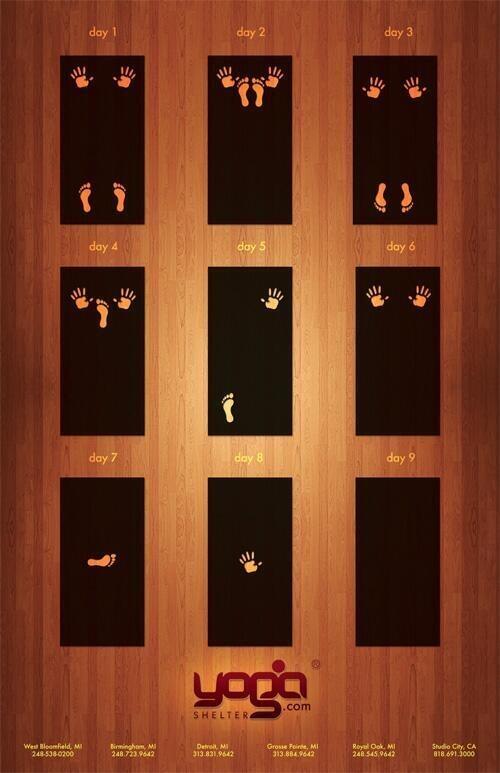
Sometimes when you leave it up to the viewer, the connection they make with your message is stronger.
This graphic for Yoga Shelter is a perfect example of that.
Is there a way you can strengthen YOUR brand in this way?

Fill out this form to download your copy